Whisky 101: From America To Japan
Whisky is a spirit defined by place. While all whisky comes from fermented grain (corn, rye, barley and wheat), the specific rules of the country where it is distilled determine its name, its character, and its flavour. Whether you prefer the sweetness of Kentucky corn or the smoky complexity of Scottish barley, understanding the region is the key to finding your perfect dram.
Click Link Below To See a Specific Whisky Region!
American Whiskey: Bold & Sweet
The story of American whiskey began when early settlers discovered an abundance of rye, leading to the birth of the first US whiskies. Later, as the frontier expanded into present-day Kentucky, corn became the dominant crop, and America’s treasure—Bourbon—was born. While production in the US ranges from unregulated moonshine to white whiskey, the country is best known for its strict standards on aging and ingredients. Below, we explore the three primary types: Bourbon, Tennessee Whiskey, and Rye.
The United States is famous for strict rules that result in bold, consistent flavours.
American Bourbon
Requirements:
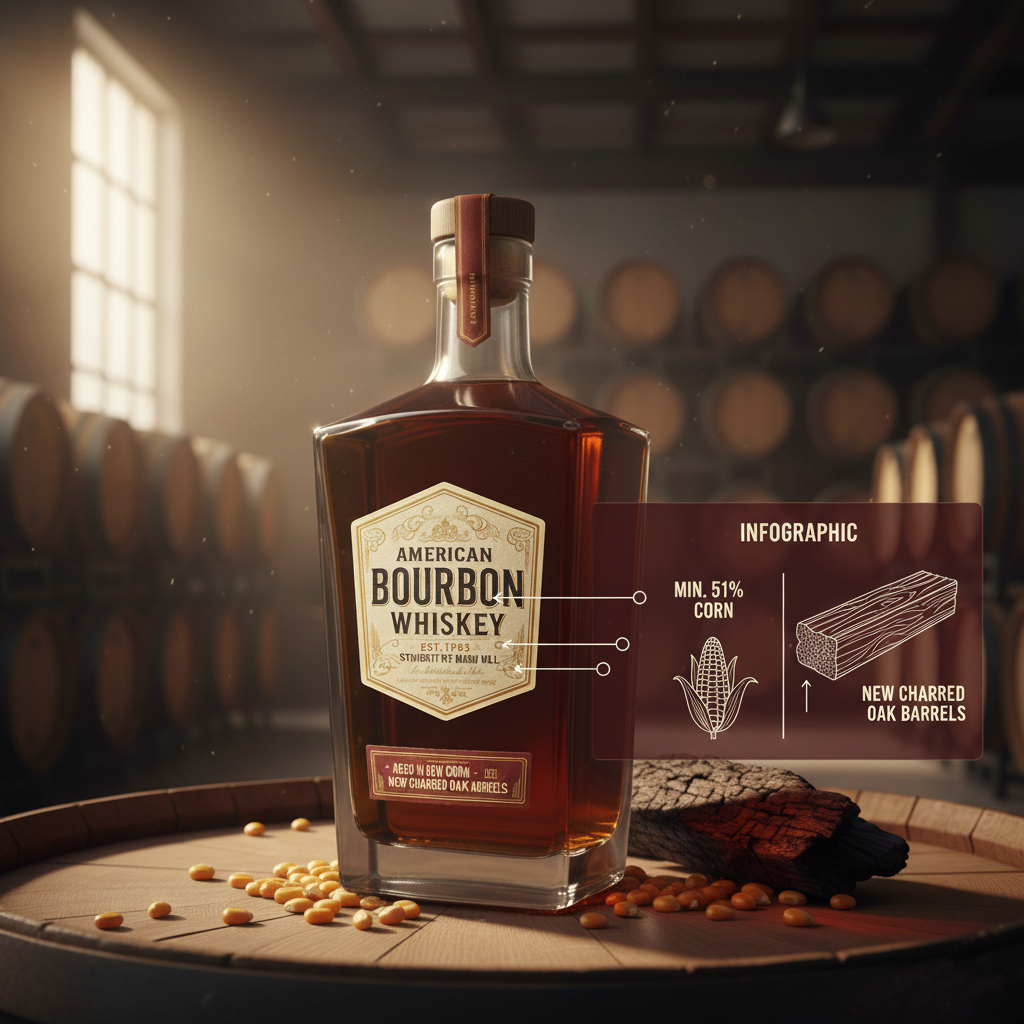
Must be made in the USA (mostly Kentucky) from at least 51% corn. It must be aged in new charred oak barrels, with no additives allowed except water.
Taste:
Because of the corn and new oak, Bourbon is generally the sweetest member of the whisky family, known for heavy caramel and vanilla tones.
Requirements:
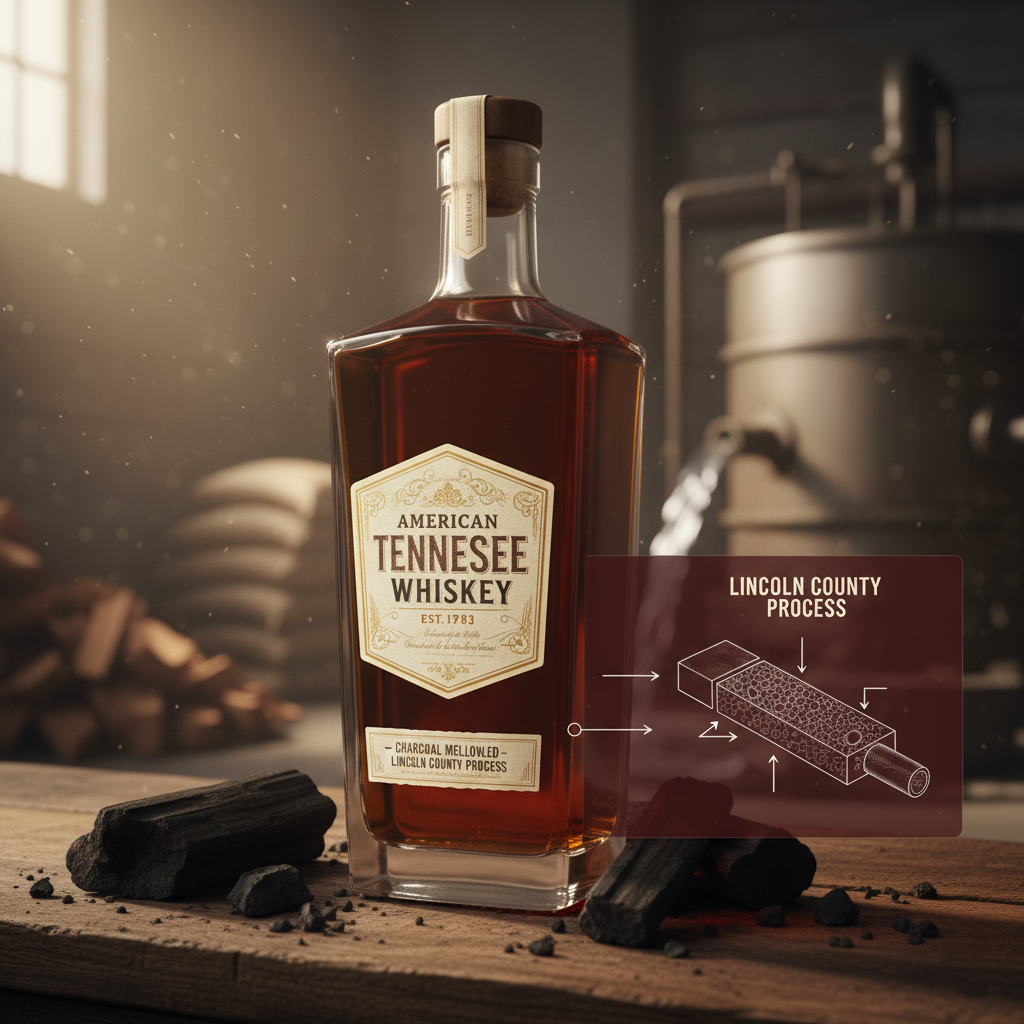
Follows the same rules as Bourbon (51-79% corn) but adds one crucial step: the Lincoln County Process. The spirit is filtered through maple charcoal chunks before aging.
Taste:
Similar to Bourbon, but the charcoal filtering makes it mellower and slightly sweeter, often with a hint of soot or smoke
Tennessee Bourbon
Requirements:
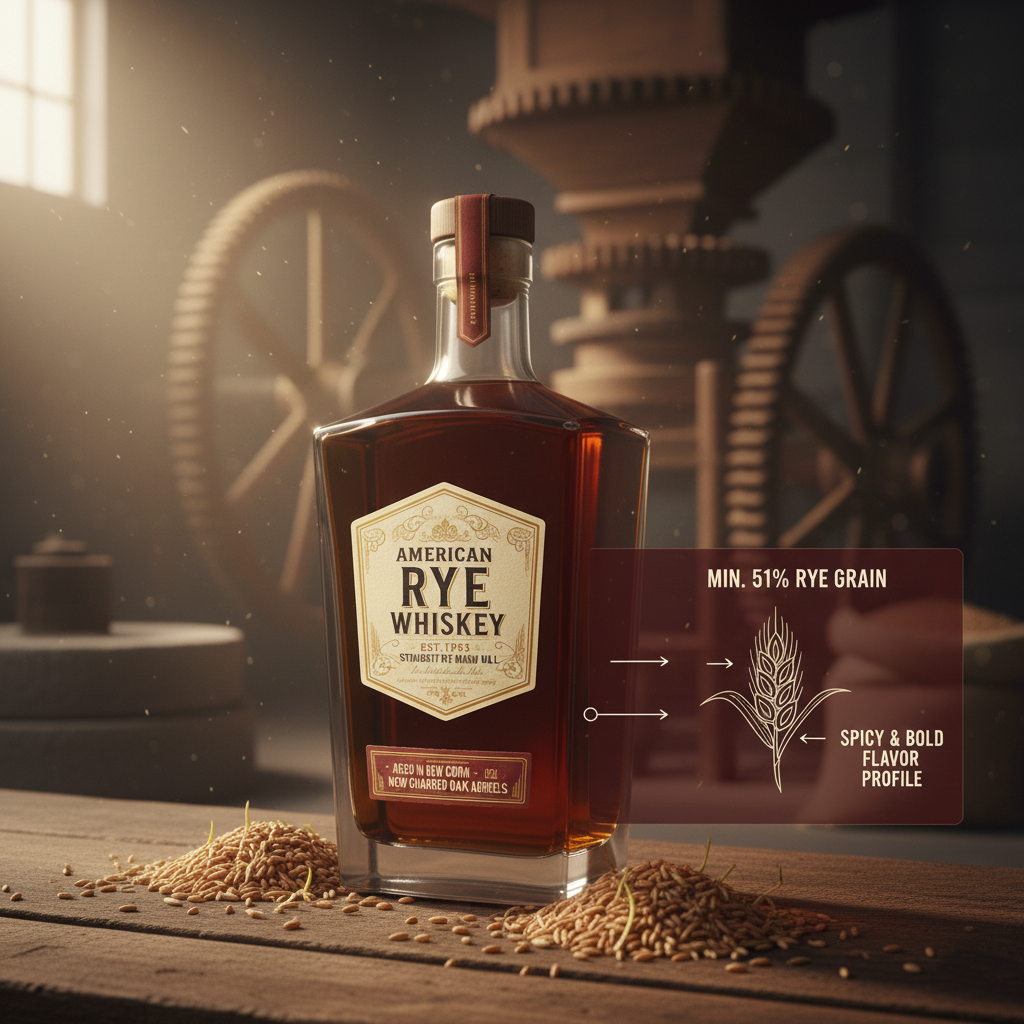
Must be made from at least 51% rye grain and aged in new charred oak.
Taste:
Rye offers a crisper, spicier, and sharper mouthfeel than Bourbon. It is the classic choice for cocktails like the Manhattan.
Rye Whiskey
Canadian Whisky: Light & Smooth
Often referred to simply as "Rye," Canadian whisky has a history rooted in surviving cold winters, as initially, rye was one of the few crops that could withstand the harsh winters of Eastern Canada.
However, the name can be misleading; while it can legally be called "rye whisky," modern iterations often use more corn than any other grain. Today, Canadian whisky acts as a "smooth" alternative to its southern neighbours, often involving the blending of a base whisky with a flavouring whisky.
Taste Profile:
Generally lighter and sweeter than American whiskey, making it very easy to drink. If the distiller notes that rye was used generously in the finishing, expect a nice, spicy bite.
The Rules:
-
Must be mashed, distilled, and aged in Canada
-
Must be aged in small wood for at least 3 years.
-
It can be called “Rye Whisky” even if it uses more corn than rye.
Compared to other major whisky nations, Canada has the most relaxed regulations, allowing distillers to follow their own unique production methods. To be officially Canadian:
How its Made:
Canadian distillers rarely share barrels. Instead, they typically create two distinct spirits and blend them.
Base Whisky:
Distilled at a high alcohol content and aged in used barrels to reduce wood influence, providing the characteristic "smoothness" or "elegance".
Flavouring Whisky:
Distilled at a lower proof to highlight grain flavours and aged in virgin or mixed barrels to extract maximum character.
Scotch Whisky: Complex & Regional
Scotch is arguably the most famous style in the world. It is primarily made from malted barley (along with other grains) and is often categorized by the region of origin, such as the coast or the plains.
For a whisky to be a Scotch, it must be made in Scotland. While there are various types, Single-Malt is often considered the "cream of the crop.”
The Rules:
-
Must be made in Scotland.
-
Must be aged at least 3 years in an oak cask.
-
Single-malts use small pot stills and go through at least two distillation runs.
Taste Profile & Styles:
Flavours vary wildly by region; coastal areas absorb briny sea air, while inland regions are more floral.
-
100% malted barley from a single distillery.
-
A blend of 100% malted barley whiskies from two or more different distilleries.
-
Combines single-malt whisky with corn or wheat whisky.
Pro Tip:
Adding a splash of water or ice isn’t a “lesser” way to drink Scotch; it is common practice in Scotland to help open up the flavours.
Irish Whisky: Triple-Distilled & Approachable
Irish whiskey shares similarities with Scotch but is distinct for its unique "Single Pot Still" style and its general lack of smokiness.
Uniquely, there are only about three working distilleries in all of Ireland!
The Rules:
-
Must be made in Ireland.
-
Most Irish whiskey is distilled three times (Scotch is usually two).
-
Barley is roasted in closed kilns (using coal or gas) to preserve a clear barley flavor, rather than using peat smoke.

Taste Profile & Styles:
Famous for being smooth. The triple distillation removes the heaviness found in other spirits, and it generally lacks the smokiness of Scotch. It is less sweet than Bourbon, making it arguably the most "approachable" of the dark spirits.
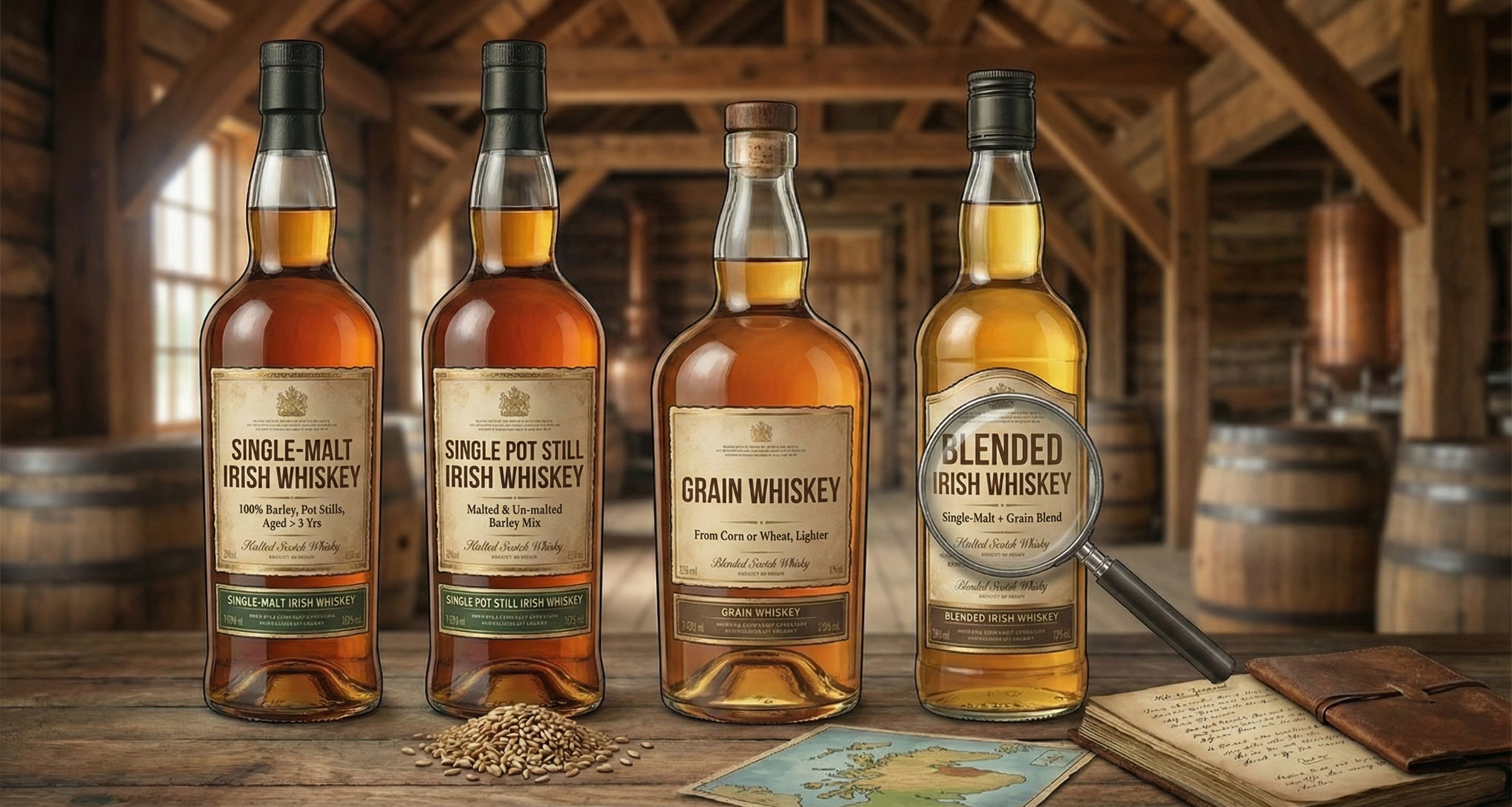
-
Made from 100% barley in pot stills and aged at least 3 years.
-
This style uses a mix of both malted and unmalted barley in the mash.
-
Lighter than single malts; distilled from corn or wheat.
-
A combination of single-malt and grain whiskey.
Japanese Whisky: Refined & Balanced
Japan’s distilleries were originally modelled after Scotch production. Over time, they have evolved through a philosophy of "continuous refinement," constantly tweaking recipes rather than sticking to a static formula.
Taste Profile:
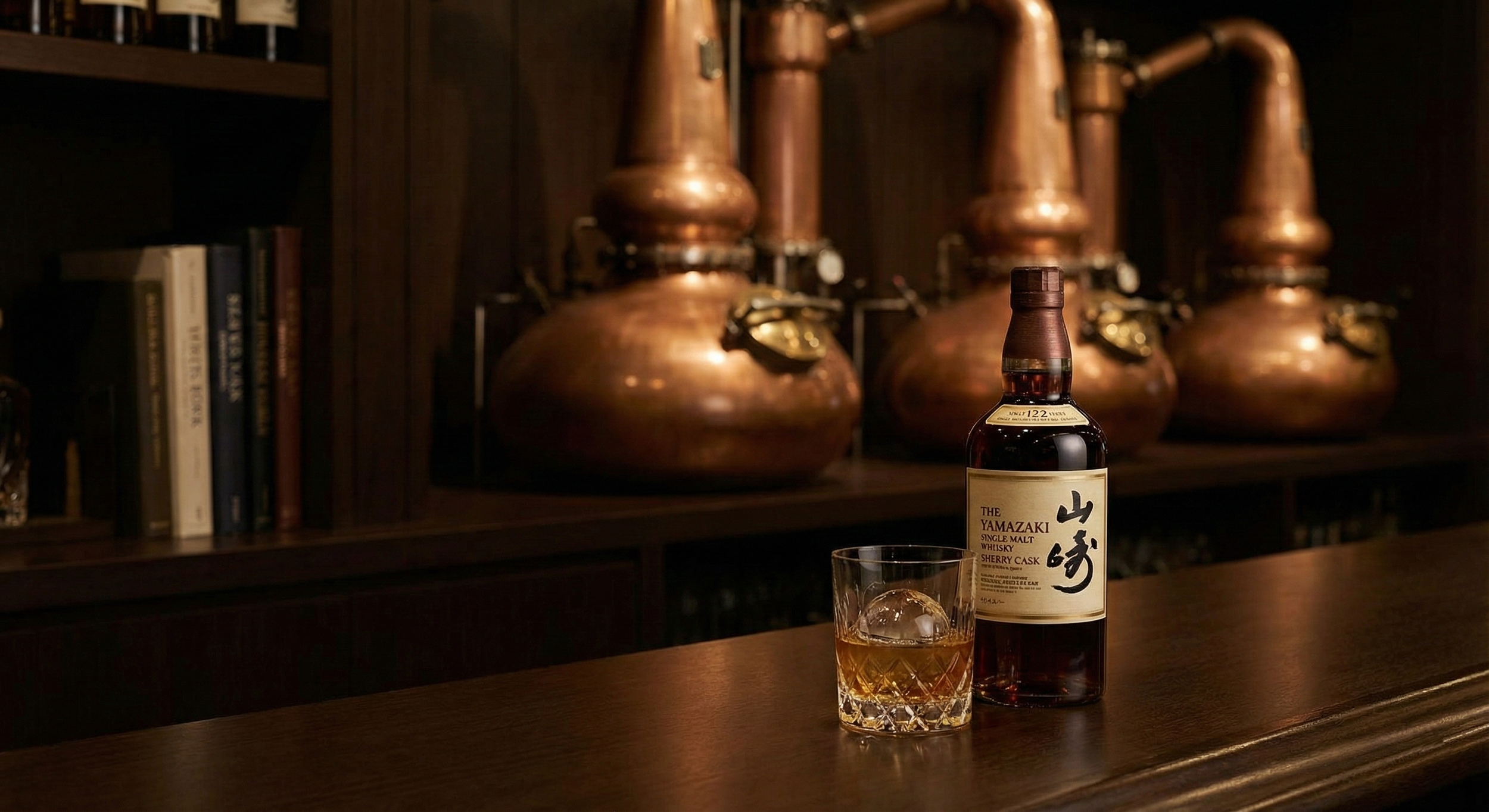
While similar to Scotch in ancestry, Japanese whisky has developed its own bold, complex, and incredibly well-balanced character. They are highly regarded globally, with specific bottles like Yamazaki Single Malt Sherry Cask previously winning “World’s Best Whisky”.
The Difference:
While Scottish distilleries usually use one or two standard still sizes, Japanese distilleries often house an array of different still shapes and sizes. This allows a single location to craft a massive range of styles and tastes.